

Preloader

Office Address

High Street, North Crawley Newport Pagnell

Phone Number

01234515254

Email Address

Operations@SECURYCOR.com

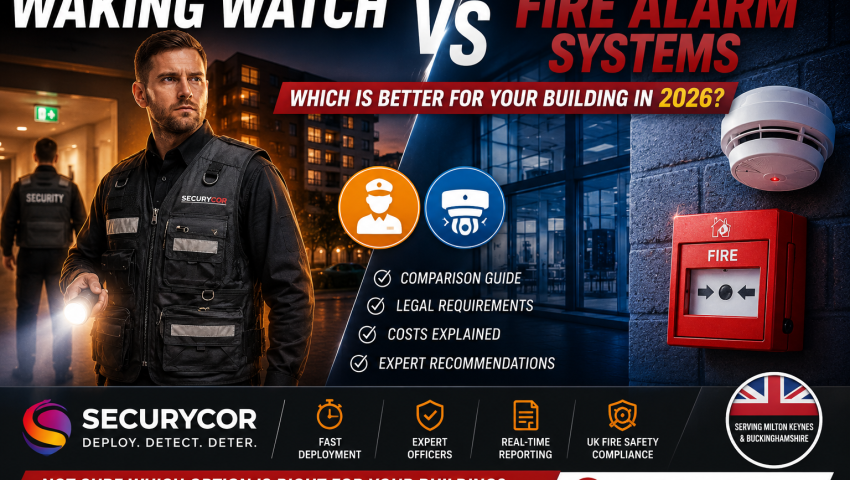
Waking Watch vs Fire Alarm Systems: What’s Best?

Compare waking watch vs fire alarm systems in 2026. Learn compliance, costs & best options for your building in Milton Keynes.

When it comes to fire safety compliance, property owners and managers across Milton Keynes are increasingly asking one key question: waking watch vs fire alarm which is the better solution for your building in 2026?

With evolving UK regulations, rising compliance expectations, and growing awareness of fire risks particularly in residential blocks and mixed-use developments choosing the right safety approach is critical. Whether you manage a building in Central Milton Keynes, Newport Pagnell, or elsewhere in Buckinghamshire, understanding your options can help you avoid legal issues while ensuring occupant safety.

This guide explains the differences between waking watch services and fire alarm systems, when each is required, and how to choose the most effective and compliant solution.


What Is Waking Watch?

A waking watch is a temporary fire safety solution involving trained personnel who patrol a building 24/7 to detect fire risks and support evacuation if necessary.

Key purposes:

  • Provide continuous human monitoring
  • Identify fire hazards early
  • Raise alarms and assist with evacuation
  • Maintain compliance when systems are inadequate

When it is used:

  • Faulty or non-compliant fire alarm systems
  • Buildings with unsafe cladding
  • During fire safety remediation works
  • High-risk residential or commercial properties

Role in compliance:

Under UK regulations, particularly the Fire Safety Act, a waking watch acts as an interim safety measure when permanent systems are not yet compliant.

👉 In simple terms:
A waking watch is a manual fire detection system backed by trained professionals.


What Is a Fire Alarm System?

A fire alarm system is an automated solution designed to detect smoke, heat, or fire and alert occupants immediately.

Types of fire alarm systems:

  • Temporary systems (often used during construction or upgrades)
  • Permanent systems (installed as long-term compliance solutions)

How it works:

  • Sensors detect fire-related conditions
  • Alarms trigger automatically
  • Alerts occupants and emergency services

Common use cases:

  • Offices and commercial buildings
  • Residential blocks
  • Warehouses and industrial facilities

Fire alarm systems are a core part of modern fire safety systems UK standards and are often required for long-term compliance.


Key Differences Between Waking Watch and Fire Alarm Systems

Waking Watch vs Fire Alarm Systems Comparison

Feature

Waking Watch

Fire Alarm System

Type

Human monitoring

Automated system

Deployment Speed

Immediate (often within 24–72 hours)

Requires installation time

Compliance Role

Temporary/interim solution

Long-term compliance solution

Monitoring

Continuous physical patrols

Sensor-based detection

Reliability

Human judgement + presence

Automated, consistent detection

Cost Structure

Ongoing staffing cost

One-time installation + maintenance

Flexibility

Highly adaptable

Fixed system setup

Key takeaway:

  • Waking watch = Immediate, temporary protection
  • Fire alarms = Long-term, automated safety

When You MUST Use Waking Watch (UK Compliance)

There are situations where a waking watch is not optional it is required to meet waking watch requirements UK standards.

Mandatory scenarios include:

  • Fire Safety Act compliance gaps
  • Buildings with unsafe cladding or structural fire risks
  • Non-functional or inadequate fire alarm systems
  • During remediation or upgrade works
  • High-risk buildings with vulnerable occupants

In areas like Milton Keynes and Newport Pagnell, many residential developments have required waking watch services during compliance upgrades.

👉 Key point:
Waking watch is often a legal necessity when immediate risk mitigation is required.


When a Fire Alarm Can Replace Waking Watch

A fire alarm system can replace a waking watch but only under the right conditions.

When alarms are sufficient:

  • Fully compliant with UK regulations
  • Properly installed and tested
  • Cover all required risk areas
  • Integrated with emergency response systems

When alarms are NOT enough:

  • During installation or upgrade phases
  • If systems are incomplete or faulty
  • When risk levels exceed automated detection capability

Risk considerations:

  • Occupant safety
  • Building layout complexity
  • Response time requirements

👉 In many cases, waking watch services remain necessary until a compliant alarm system is fully operational.


Cost Comparison: Waking Watch vs Fire Alarm Systems

Understanding cost is important, but it must be approached carefully.

What affects cost?

For waking watch:

  • Number of officers required
  • Building size and layout
  • Risk level
  • Duration of service

For fire alarm systems:

  • Installation complexity
  • Equipment type
  • Maintenance requirements
  • Monitoring integration

👉 Important:
Because every building has unique fire safety risks, providing a fixed cost without assessment can be misleading. For an accurate comparison and tailored solution, it’s best to contact Securycor directly.


Which Option Is Best for Your Building?

Choosing between fire alarm vs waking watch depends on several key factors:

Choose waking watch if:

  • Immediate compliance is required
  • Fire systems are not operational
  • Building risk is high
  • Temporary protection is needed

Choose fire alarm systems if:

  • You need a long-term solution
  • Compliance requirements are stable
  • Budget allows for installation
  • Risk levels are manageable

Best approach:

In many cases, the most effective strategy is:
➡️ Start with waking watch → transition to fire alarm system

This ensures:

  • Immediate protection
  • Long-term compliance
  • Reduced long-term costs

Why Securycor Is the Trusted Choice for Waking Watch

When selecting a provider in Milton Keynes or Buckinghamshire, experience and compliance expertise are essential.

Securycor is trusted for:

  • Direct employment model (no subcontracting risks)
  • Fast deployment within 72 hours
  • Compliance-focused approach aligned with UK regulations
  • Real-time reporting and communication
  • Professional, SIA-trained officers

With extensive experience across Milton Keynes, Newport Pagnell, and surrounding areas, Securycor delivers reliable temporary fire safety solutions tailored to each building.


Supporting Fire Safety Through Integrated Services

Many clients combine waking watch with additional support services, including:

  • Security services for site protection
  • Mobile patrols for perimeter monitoring
  • Key holding for emergency access

This integrated approach strengthens overall safety and compliance.


Conclusion

Choosing between waking watch vs fire alarm systems is not about one being better than the other it’s about selecting the right solution for your building at the right time.

Waking watch provides immediate, compliant protection when risks are high or systems are not ready. Fire alarm systems offer long-term, automated safety once compliance is achieved.

For property managers and business owners in Milton Keynes, making the right decision requires expert guidance, a clear understanding of regulations, and a tailored approach.

Securycor LTD
Author

Securycor LTD

Leave a comment

Your email address will not be published. Required fields are marked *

Request A Call Back

Ever find yourself staring at your computer screen a good consulting slogan to come to mind? Oftentimes.

shape
Your experience on this site will be improved by allowing cookies.