

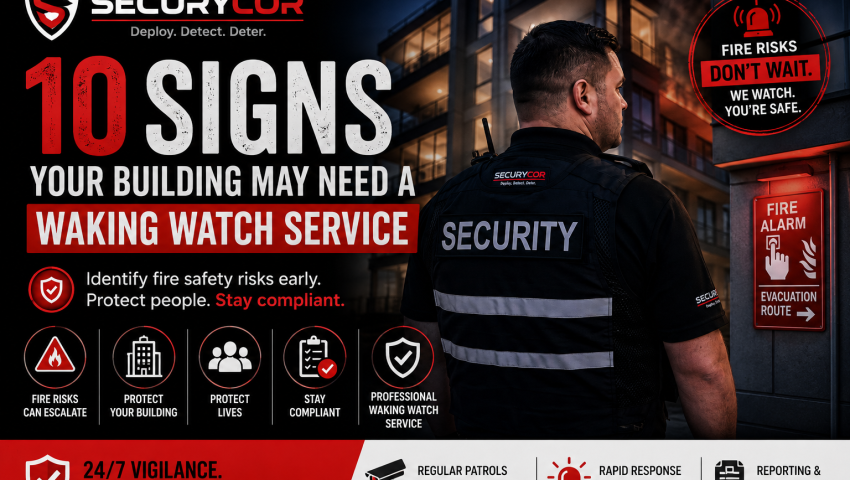
10 Signs Your Building May Need a Waking Watch Service
 By Securycor LTD
- Jul 19, 2026
- 9 minutes read
- 120 Views
How to Identify Fire Safety Risks Before They Become Compliance Issues
Fire safety is one of the most important responsibilities for today's building owners, managing agents, housing associations and facilities managers. Whether you oversee a block of flats, student accommodation, a care home or a commercial premises, protecting residents, staff and visitors is both a legal duty and a moral responsibility.
In recent years, UK fire safety legislation has evolved significantly following the Grenfell Tower tragedy. The introduction of the Fire Safety Act 2021, the Building Safety Act 2022, and updated guidance from the National Fire Chiefs Council (NFCC) has placed greater emphasis on identifying fire risks and implementing appropriate interim fire safety measures where necessary.
One of the most effective interim measures is a waking watch service. However, many Responsible Persons are unsure whether their building actually requires one. In many cases, the need only becomes apparent after a Fire Risk Assessment highlights serious concerns or following advice from the local Fire and Rescue Service.
Recognising the warning signs early allows you to take proactive action, maintain compliance with UK fire safety regulations and, most importantly, safeguard the people who rely on your building every day.
Here are 10 signs that your building may require a professional waking watch service.
1. Your Building Has Unsafe Cladding
Following extensive investigations into external wall systems across the UK, buildings with combustible or non-compliant cladding continue to present increased fire risks until remedial works are completed.
Where external wall systems are found to be unsafe, a Fire Risk Assessment may recommend interim fire safety measures to protect residents while permanent remediation is carried out.
A professional waking watch service provides continuous patrols throughout the building, enabling trained officers to identify signs of fire at the earliest opportunity, raise the alarm and support a safe evacuation if required.
Buildings commonly affected include:
- High-rise residential developments
- Blocks of flats
- Student accommodation
- Mixed-use developments
- Residential buildings undergoing cladding remediation
If your property is affected by unsafe cladding, arranging an appropriate interim fire safety solution should be considered without delay.
2. Your Fire Alarm System Is Temporarily Unavailable
Even the most reliable fire alarm systems occasionally require maintenance, upgrades or replacement.
During these periods, your building may be left without an effective means of early fire detection, increasing the risk to residents and building users.
Rather than leaving the property vulnerable, trained waking watch officers carry out regular patrols of communal areas, stairwells, corridors and escape routes. Should they identify signs of fire, they immediately raise the alarm and begin established emergency procedures.
A waking watch offers reassurance while essential works are completed and helps ensure that appropriate fire safety arrangements remain in place.
3. Fire Doors or Compartmentation Have Failed
Effective fire safety relies on more than alarms alone.
Fire doors, fire-resistant walls and compartmentation are designed to slow the spread of smoke and flames, allowing occupants valuable time to evacuate safely.
However, inspections sometimes reveal issues such as:
- Damaged fire doors
- Missing self-closing mechanisms
- Defective fire stopping
- Service penetrations
- Compartmentation failures
Until these defects have been rectified, the building may present a significantly higher level of risk.
Introducing a waking watch service provides an additional layer of protection by ensuring continuous monitoring while remedial works are undertaken.
4. Major Refurbishment or Building Works Are Taking Place
Construction and refurbishment projects frequently affect normal fire safety arrangements.
Whether you're replacing fire alarm systems, upgrading electrical infrastructure or carrying out structural alterations, certain safety systems may need to be isolated temporarily.
Common examples include:
- Fire alarm upgrades
- Electrical installations
- Lift refurbishment
- Structural alterations
- Temporary closure of escape routes
- Planned maintenance of fire safety equipment
During these periods, a waking watch helps minimise the increased fire risk by providing continuous human supervision until permanent systems are fully operational again.
For many building owners, this provides reassurance that residents remain protected throughout the project.
5. Your Fire Risk Assessment Recommends Interim Fire Safety Measures
A Fire Risk Assessment (FRA) is one of the most important documents for any residential or commercial building.
Completed by a competent fire risk assessor, it identifies hazards, evaluates existing fire protection measures and recommends improvements where necessary.
If your Fire Risk Assessment recommends interim fire safety measures, those recommendations should never be ignored.
In many cases, assessors recommend a waking watch where there is an increased likelihood of fire spreading or where existing fire detection systems do not provide adequate protection.
Acting promptly demonstrates good building management, helps fulfil your legal responsibilities and significantly reduces the risk to residents, staff and visitors.
6. Your Building Has Switched to a Simultaneous Evacuation Strategy
Many residential buildings in the UK are designed around a 'Stay Put' evacuation strategy. This approach relies on robust compartmentation, fire-resistant construction and effective fire protection systems to contain a fire within the affected flat, allowing other residents to remain safely where they are unless instructed otherwise by the Fire and Rescue Service.
However, where significant fire safety defects are identified, this strategy may no longer be appropriate.
In these circumstances, a Simultaneous Evacuation Strategy may be introduced, requiring all occupants to evacuate the building immediately if a fire is detected.
Implementing a simultaneous evacuation strategy often increases the need for continuous monitoring. A professional waking watch service helps ensure that any signs of fire are identified promptly, the alarm is raised without delay, and residents are assisted with a safe and orderly evacuation until permanent fire safety measures have been reinstated.
7. You Manage a Higher-Risk Residential Building
Some buildings naturally present a greater level of fire risk because of their size, design or occupancy.
Examples include:
- High-rise blocks of flats
- Student accommodation
- Sheltered housing schemes
- Care homes
- Mixed-use developments
- Housing association properties
Where fire safety systems have been compromised, these buildings often require additional interim protection due to the number of occupants and the complexity of evacuation.
A waking watch provides reassurance that trained professionals are continuously monitoring communal areas, helping to reduce risk while permanent fire safety improvements are completed.
8. Residents Are Raising Fire Safety Concerns
Residents are often the first to notice issues that may affect the safety of a building.
Repeated reports relating to fire safety should always be investigated promptly.
Common concerns include:
- Faulty or unreliable fire alarm systems
- Fire doors that fail to close correctly
- Smoke entering communal corridors
- Obstructed escape routes
- Poorly illuminated fire exits
- Concerns during refurbishment works
While some issues may appear minor in isolation, together they can indicate wider fire safety deficiencies.
Taking these concerns seriously demonstrates responsible building management and helps ensure any necessary interim fire safety measures are introduced before risks escalate.
9. You've Received Advice or Enforcement Action from the Fire and Rescue Service
If the local Fire and Rescue Service, Building Control or an independent fire safety consultant identifies shortcomings in your building's fire safety arrangements, immediate action may be required.
This may include:
- Fire safety recommendations
- Enforcement notices
- Improvement notices
- Building safety inspections
- Recommendations following a Fire Risk Assessment
In many cases, implementing a waking watch service provides an effective interim solution while permanent remedial works are carried out.
Acting promptly not only improves safety but also demonstrates your commitment to meeting your legal responsibilities as the Responsible Person.
10. Fire Protection Systems Have Been Temporarily Isolated
Fire protection systems occasionally need to be taken offline whilst maintenance or upgrade works are completed.
Examples include:
- Fire alarm replacement programmes
- Sprinkler maintenance
- Electrical upgrades
- Planned fire system testing
- Building refurbishment projects
Although these interruptions are temporary, they can significantly increase the level of fire risk within the building.
A professional waking watch service provides continuous patrols throughout the period of disruption, helping to ensure residents remain protected until all fire safety systems have been fully reinstated.
What Should You Do Next?
If your building displays one or more of these warning signs, the most important step is to seek competent professional advice rather than making assumptions.
You should:
- Review your most recent Fire Risk Assessment.
- Consult a competent fire safety professional.
- Determine whether interim fire safety measures are required.
- Arrange a professional waking watch service where recommended.
Taking early action can help protect lives, reduce liability and demonstrate compliance with current UK fire safety legislation.
Why Choose SECURYCOR for Waking Watch Services?
At SECURYCOR, we understand that every building presents its own fire safety challenges. Our waking watch services are designed to provide reliable interim fire safety solutions that protect residents while helping Responsible Persons meet their legal obligations.
Whether you require emergency cover following a failed Fire Risk Assessment or planned support during refurbishment works, our experienced team can deploy quickly across the UK.
Why organisations choose SECURYCOR
- Directly employed SIA-licensed officers – We do not rely on subcontractors, ensuring consistently high standards of professionalism and accountability.
- Rapid nationwide mobilisation – Available for both planned projects and emergency deployments.
- 24/7 fire safety patrols – Continuous monitoring of communal areas, escape routes and fire safety risks.
- Digital reporting and incident management – Providing complete transparency through detailed patrol logs and real-time reporting.
- Experienced operational management – Dedicated support from experienced security professionals throughout your contract.
- Tailored patrol plans – Every deployment is based on your building's Fire Risk Assessment and specific operational requirements.
Trusted Through Recognised Industry Accreditations
Choosing an accredited security provider gives you confidence that your interim fire safety measures are being delivered to recognised industry standards.
SECURYCOR is proud to hold a range of respected accreditations, including:
- Constructionline Gold
- CHAS (Contractors Health and Safety Assessment Scheme)
- SafeContractor
- SSIP (Safety Schemes in Procurement)
These accreditations reflect our commitment to quality, compliance, health and safety, and professional service delivery across every contract we undertake.
Frequently Asked Questions
Do all buildings require a waking watch service?
No. A waking watch is only recommended where a competent Fire Risk Assessment identifies that existing fire safety measures are insufficient to protect residents or building users.
How long does a waking watch remain in place?
A waking watch is intended as an interim measure and typically remains in place until permanent fire safety improvements such as alarm installations, compartmentation repairs or cladding remediation have been completed.
Can a temporary fire alarm replace a waking watch?
In some circumstances, yes. This depends on the findings of the Fire Risk Assessment and whether the temporary fire alarm system provides an appropriate level of protection for the building.
Who is responsible for arranging a waking watch?
Responsibility generally rests with the Responsible Person, which may include the building owner, managing agent, housing association or facilities manager.
How quickly can SECURYCOR deploy a waking watch team?
Our experienced operational team can mobilise rapidly across the UK, enabling us to respond to both planned requirements and urgent fire safety situations.
Protect Your Building with Professional Waking Watch Services
Fire safety risks should never be overlooked. Identifying potential issues early and implementing appropriate interim fire safety measures can help protect lives, maintain legal compliance and reduce the likelihood of enforcement action.
If your Fire Risk Assessment recommends a waking watch service, or if your building displays any of the warning signs outlined in this guide, SECURYCOR is here to help. Our experienced, directly employed SIA-licensed officers provide professional waking watch services across the UK.
Securycor LTD
Leave a comment
Your email address will not be published. Required fields are marked *